Our phone is the new tobacco — woven into how we connect, decide, sleep, focus, work, and remember. We need it to live in this digital era. We just were never taught how to use it well.
lock/unlocks a day — one every 10 minutes you’re awake, from over-connection and social anxiety. (ABC)
of sleep lost a year to bedtime scrolling — one of the quietest, most common harms. (Amerisleep)
car crashes are caused annually by drivers using cell phones and texting (National Safety Council)
PULSE spots over-connection, social anxiety, toxic fitness comparison, and reaching for social media the moment you wake up — then gives you a mini recommendation to break the pattern.
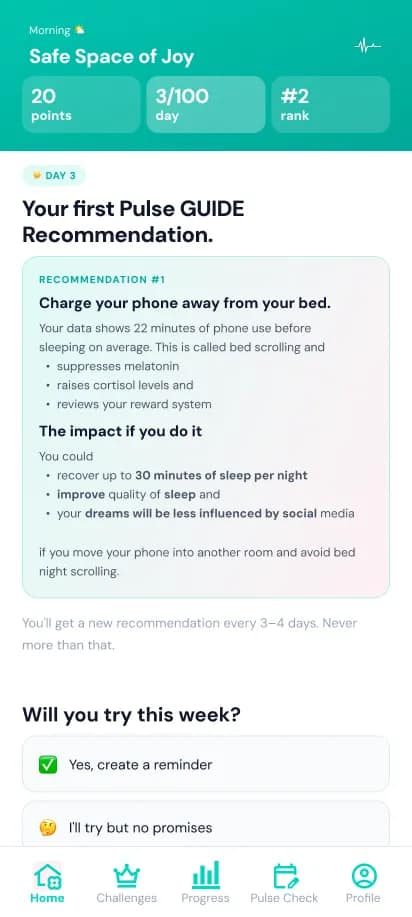
Bedtime scrolling is one of the quietest harms of phone use. PULSE tracks it and follows up with a small, specific recommendation to help you put the phone down sooner.
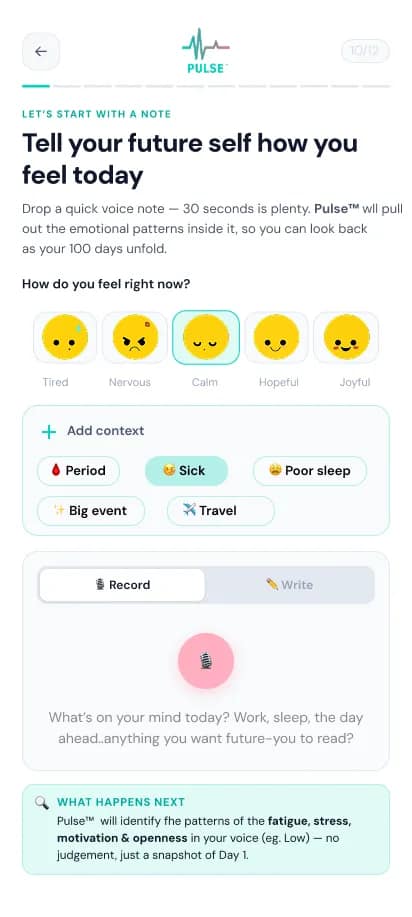
Leave yourself a voice note — how you feel, what’s on your mind. PULSE analyzes it to surface motivation, negative mood, stress, and what you actually care about right now.
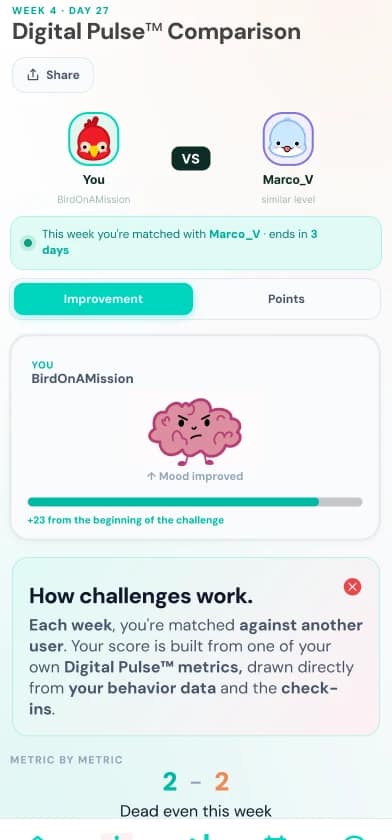
Small daily actions create lasting change. Weekly challenges against friends keep you engaged and moving toward healthier habits, one week at a time.
Governments are already banning social media for minors. Public Health collapses because of AI, social anxiety and depression. Workplaces are losing millions to digital overload. Understanding our relationship with our phones — one person at a time — is how we start to change that at scale.
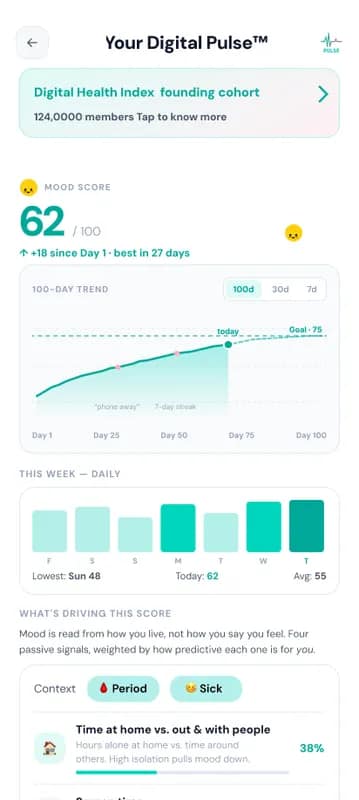
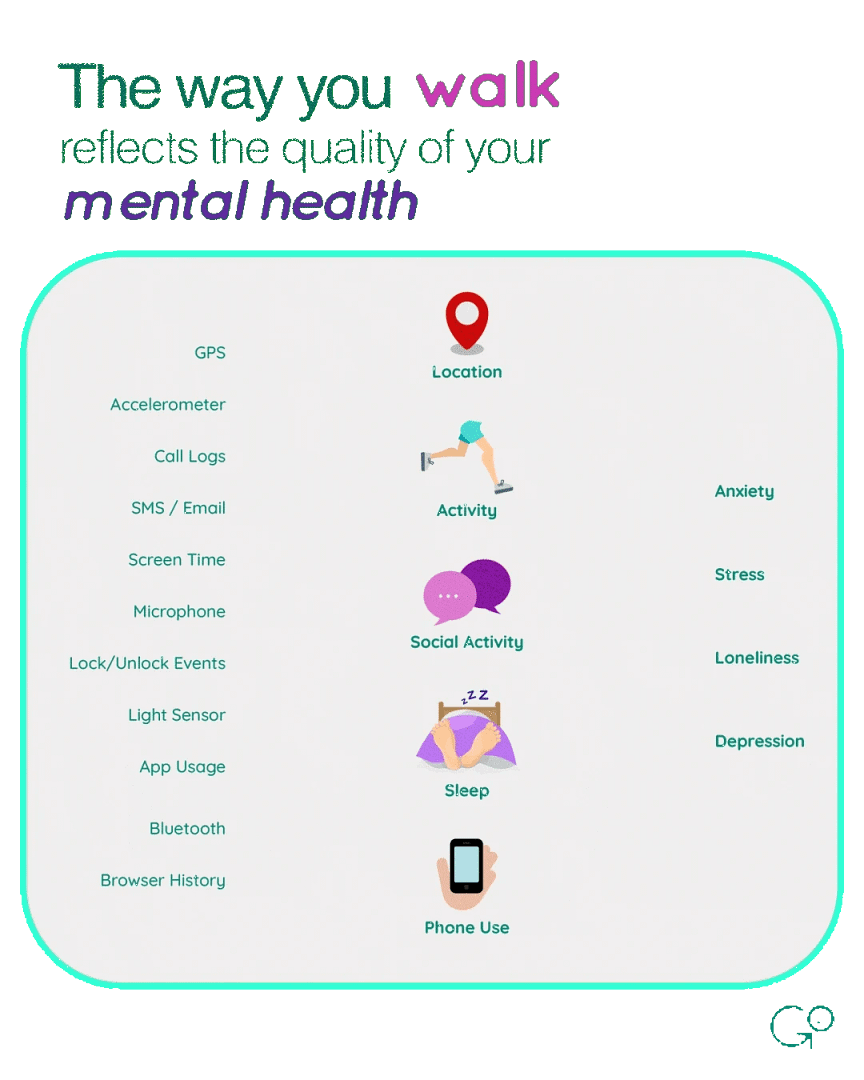
Your phone already knows a lot about you — digital phenotyping reads screen time, app use, voice and communication patterns to spot mood, stress and burnout signals, often weeks before you’d notice them yourself.
A randomized non-clinical trial with 81 young adults in Italy and Ticino found that a chatbot-delivered digital phenotyping program improved self-reported well-being from 3.06 to 4.1 (of 5), with participants rating personalized exercises 3.77/5 for usefulness. Unsupervised clustering (K-means + SHAP) grouped participants by online notifications, insomnia, attention and energy to personalize recommendations.
Read the paper →Ongoing collaborations with clinics and hospitals continue to test and validate our models in clinical settings, building the evidence base behind PULSE™ and Go Healthy & Clinics.
Read on PubMed →Individual transformation powers collective intelligence.
Understand yourself. Discover the patterns behind your mood, sleep, focus and stress — and build healthier digital habits, one small daily action at a time.
Anonymized and aggregated behavioral data — never individual profiles — benchmarked by industry, region or team, so leaders see risk early and protect wellbeing at scale.
Population-level behavioral intelligence that protects individual privacy while giving policymakers visibility into community wellbeing — to inform prevention, not just react to it.
A small team of clinicians, engineers and designers based in Lugano, Switzerland — backed by an advisory board spanning psychology, psychiatry and pharma.
ML specialist & bioinformatician, ex-Google Cloud consultant — leads vision, strategy and fundraising.
LinkedIn ↗15+ years as a software & AI engineer — leads product strategy and architecture.
We love hearing from our community — feedback, partnership ideas, or a question about implementing digital health in your organization.